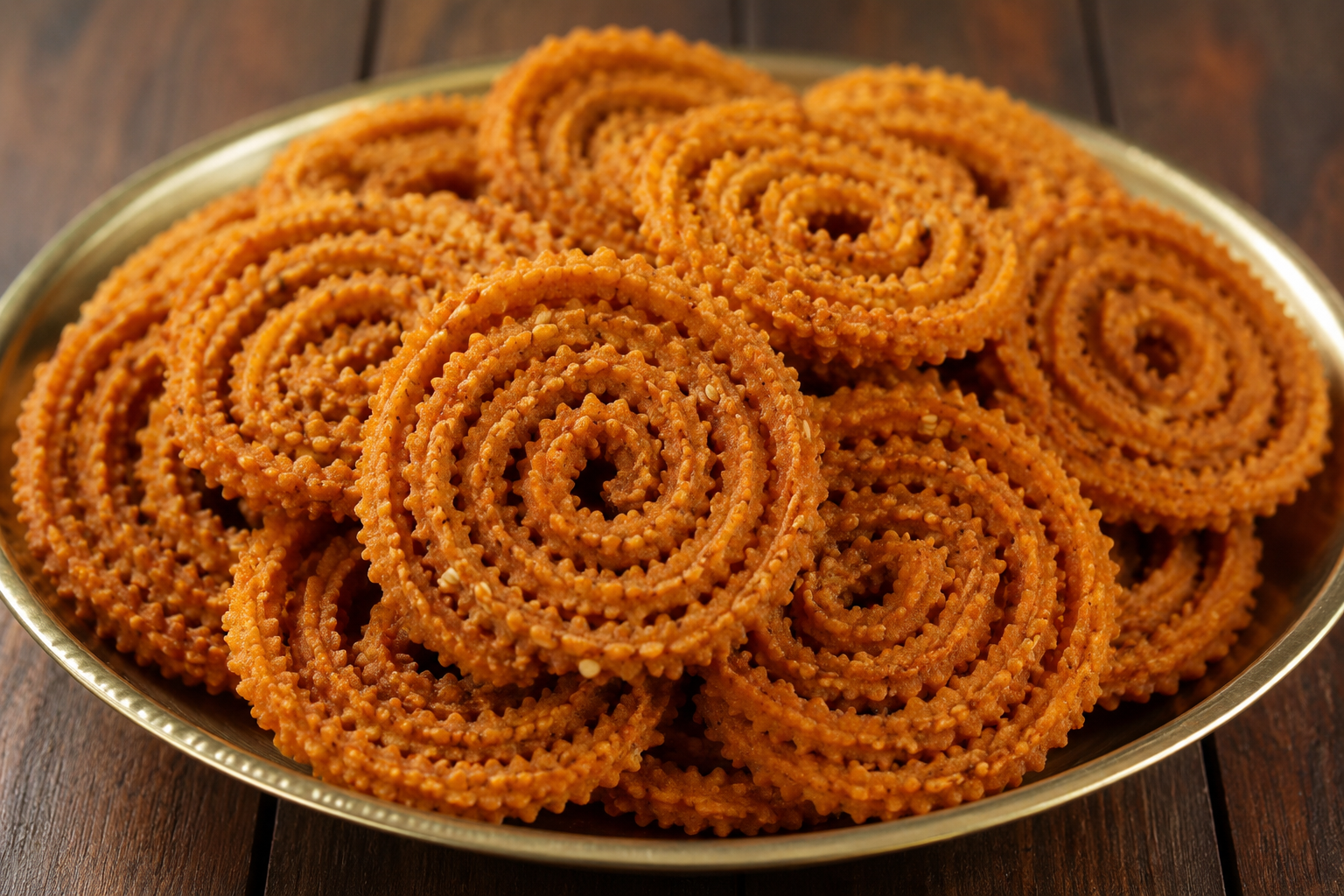
Making of Chakli
Chakli is a popular traditional Indian snack that is loved for its crispy texture, spiral shape, and delicious taste. It is prepared in many parts of India, especially during festivals such as Diwali. Different regions have their own versions of chakli, but the basic method remains similar. It is usually made from a mixture of flours and spices, which are shaped into spirals and deep-fried until golden brown. The process of making chakli requires careful preparation, proper mixing of ingredients, and correct frying techniques to achieve the perfect crunch. This essay explains the making of chakli in detail.
Introduction
Chakli is a savory snack that has been a part of Indian cuisine for centuries. It is known by different names in various states. In Karnataka, Maharashtra, and other regions, it is commonly called chakli, while in some South Indian states it is referred to as murukku. The snack is enjoyed by people of all ages and is often prepared in large quantities during festive occasions. Its crispy texture and spicy flavor make it a favorite accompaniment to tea and coffee.
The preparation of chakli involves several steps, including selecting ingredients, preparing the dough, shaping the chakli, frying it, and storing it properly. Each step is important in ensuring that the final product is tasty and crunchy.
Ingredients Required
The first step in making chakli is gathering all the necessary ingredients. The ingredients may vary slightly depending on the recipe, but the commonly used ingredients include:
●Rice flour
●Gram flour (besan)
●Urad dal flour
●Butter or oil
●Red chili powder
●Sesame seeds
●Cumin seeds
●Asafoetida (hing)
●Turmeric powder
●Salt
●Water
●Oil for deep frying
These ingredients contribute to the taste, aroma, texture, and appearance of the chakli.
Preparation of Flour Mixture
The quality of chakli depends greatly on the flour mixture. Rice flour forms the base and provides crispiness. Gram flour adds flavor and richness, while urad dal flour helps in binding the dough and improving the texture.
The flours are measured carefully and mixed together in a large bowl. The dry ingredients such as salt, chili powder, turmeric powder, sesame seeds, cumin seeds, and asafoetida are added to the flour mixture. The ingredients are stirred thoroughly to ensure even distribution of spices throughout the mixture.
Preparation of Dough
Once the dry ingredients are mixed, butter or a small amount of hot oil is added. The butter is rubbed into the flour mixture using fingers until it is evenly incorporated. This step helps make the chakli crisp and light.
Water is then added gradually while kneading the mixture. It is important not to add too much water at once because the dough may become sticky. The dough should be smooth, soft, and pliable. If the dough is too dry, the chakli may break during shaping. If it is too wet, the chakli may lose its shape while frying.
After kneading, the dough is allowed to rest for a few minutes. Resting helps the ingredients blend well and improves the texture of the final product.
Shaping the Chakli
A special kitchen tool called a chakli maker or murukku press is used for shaping the dough. The device consists of a cylindrical container fitted with a patterned disc at one end. The disc determines the shape and thickness of the chakli.
A portion of the prepared dough is placed inside the chakli maker. The lid is secured, and pressure is applied to push the dough through the patterned opening. As the dough comes out, it is carefully shaped into spiral coils on a clean cloth, butter paper, or plate.
Making neat and uniform spirals requires practice and patience. The spirals should not be too tight or too loose. Proper shaping ensures even cooking during frying.
Heating the Oil
The next stage involves heating oil in a deep frying pan or kadai. The oil should be heated to the correct temperature before frying begins. If the oil is not hot enough, the chakli will absorb excess oil and become soggy. If the oil is too hot, the outer surface may brown quickly while the inside remains uncooked.
To test the oil temperature, a small piece of dough can be dropped into the oil. If it rises steadily to the surface, the oil is ready for frying.
Frying Process
The shaped chaklis are gently lifted and placed into the hot oil. Care must be taken to avoid breaking the delicate spirals. Only a few chaklis should be fried at a time to maintain the oil temperature.
As the chaklis fry, tiny bubbles appear around them. They are turned occasionally to ensure uniform cooking on all sides. Gradually, the color changes from pale to golden brown.
The frying process requires constant attention. Over-frying may make the chakli too hard, while under-frying can leave moisture inside, reducing shelf life. Properly fried chaklis are crisp, golden, and aromatic.
Once cooked, the chaklis are removed using a slotted spoon and placed on absorbent paper to remove excess oil.
Cooling the Chakli
Cooling is an important step that should not be overlooked. Freshly fried chaklis are delicate and continue to crisp up as they cool. They should be spread out on a tray and allowed to reach room temperature.
If stored while still warm, moisture may accumulate inside the container, causing the chaklis to lose their crispness. Therefore, complete cooling is essential before storage.
Storage
After cooling, the chaklis are transferred to airtight containers. Proper storage helps maintain freshness and crunchiness for several weeks. Airtight containers protect the snack from moisture and air exposure.
Many families prepare large batches of chakli during festivals because it has a long shelf life when stored correctly. The snack remains tasty and crispy for an extended period.
Importance During Festivals
Chakli holds special significance during Indian festivals, especially Diwali. Families gather together to prepare traditional snacks, and chakli is often one of the most important items. The process of making chakli becomes a social activity where family members help in mixing, shaping, frying, and storing the snack.
The aroma of freshly fried chakli adds to the festive atmosphere. Guests are often served chakli along with other traditional sweets and savory items.
Nutritional Value
Chakli provides carbohydrates, proteins, and fats. Rice flour and gram flour supply energy, while sesame seeds contribute minerals and healthy fats. Since chakli is deep-fried, it should be consumed in moderation as part of a balanced diet.
Homemade chakli is generally preferred because the ingredients and oil quality can be controlled. Freshly prepared homemade chakli often tastes better than commercially produced versions.
Conclusion
Chakli is a delicious and traditional Indian snack that combines flavor, texture, and cultural significance. The process of making chakli involves selecting quality ingredients, preparing a well-balanced dough, shaping attractive spirals, frying them carefully, and storing them properly. Every step contributes to the final crispy and flavorful product. Chakli is not only a tasty snack but also an important part of Indian festive traditions. Its popularity continues across generations because of its unique taste, long shelf life, and association with family celebrations. The art of making chakli reflects the richness of Indian culinary heritage and remains a cherished tradition in many households.
Thank you🥰